
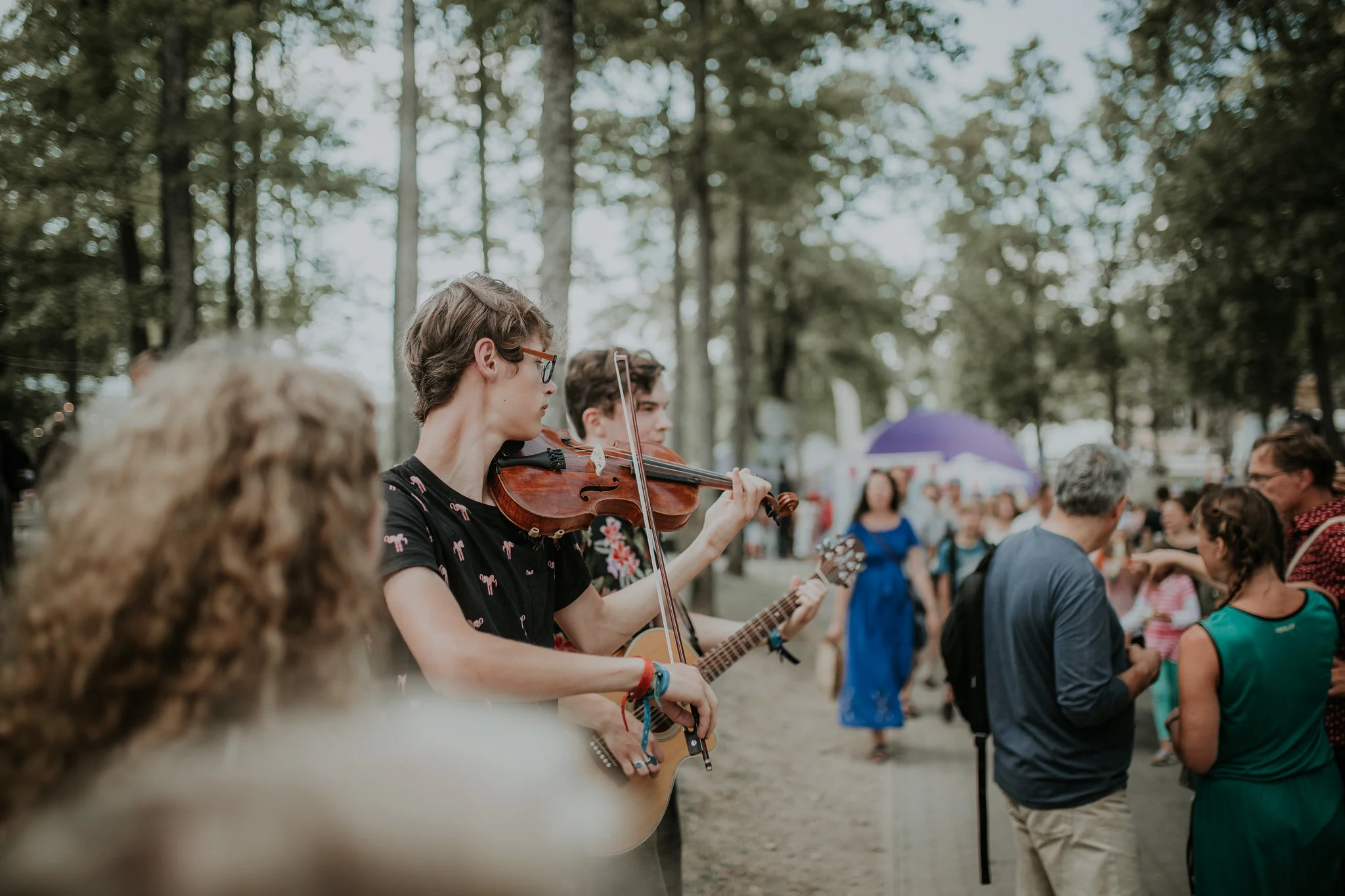
The Best of the Best: Estonian Music Festivals to Check Out on Your Next Trip
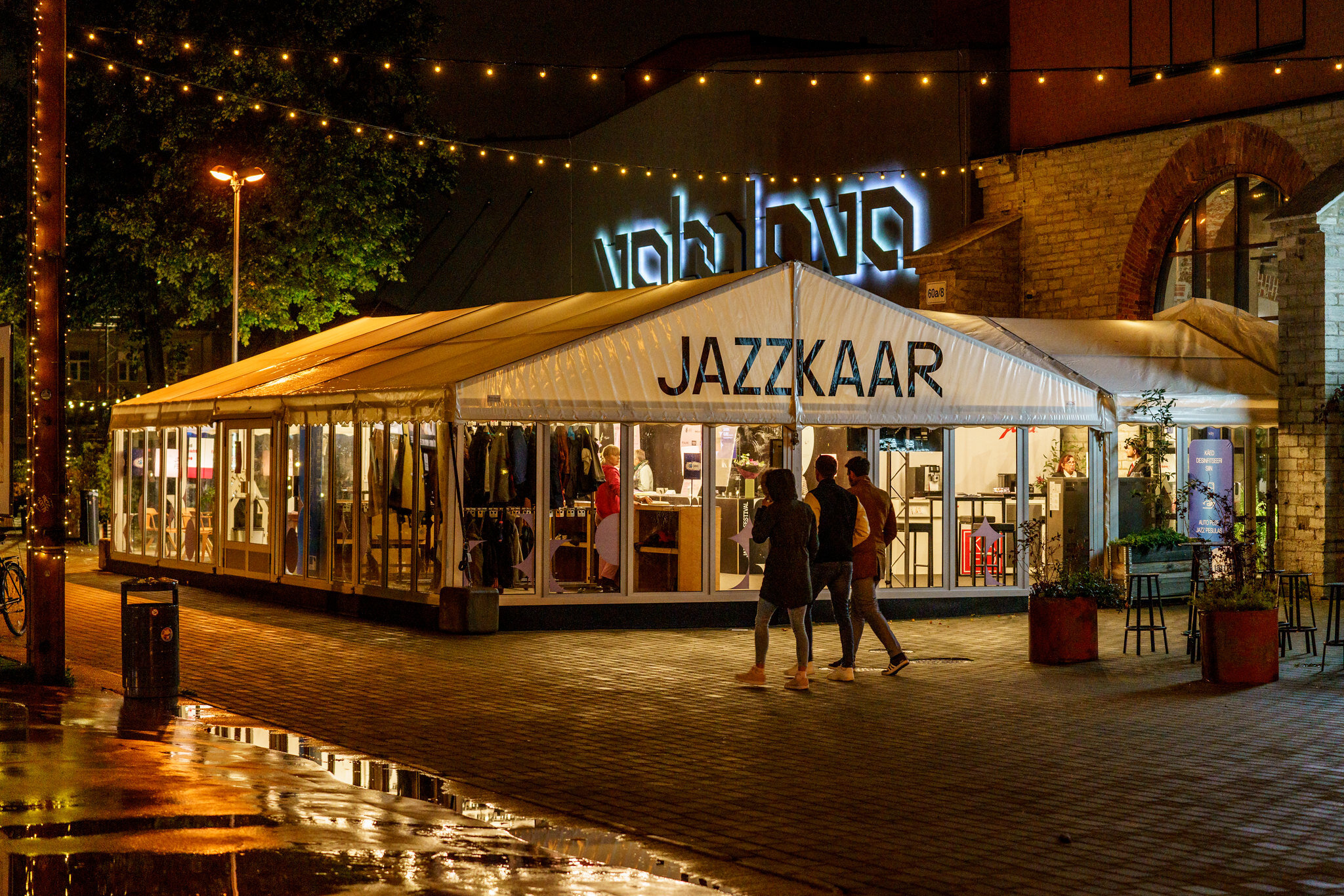
Jazzkaar 2021 Festival. Photo by Rene Jakobson
The small but mighty country of Estonia offers a spectacular culmination of culture and what better way to showcase all of the talent it has to offer than through world class music and arts festivals. From folk music to metal, jazz to classical there’s a renowned festival for everyone’s interests, offering a cultural experience that you won’t soon be able to forget. Often festivals are accompanied by exciting tours of the surrounding beautiful areas or art exhibitions offering plenty to peruse and explore, there’s not a single dull moment. Let’s dive into the best Estonian music festivals to visit and what they’re all about!
If you’re interested in Estonian folk music, how it relates and figures in today’s world and how it ties to the country’s culture as a whole, there’s three great festivals to explore. Possibly the most well known is the Viljandi Folk Music Festival. The festival has taken place every year in what is deemed to be one of the most beautiful small towns in Estonia, Viljandi, since 1993. The festival’s main goal is to increase awareness of the roots of the country’s culture as a whole and keeping these roots alive through music and the arts. Not only does Viljandi Folk offer 4 days of non stop folk music from the world’s top musicians in the genre but it also presents the opportunity to take a course in “regilaul,” the unique call and repeat musical storytelling our culture has thrived on for centuries, courses in traditional folk instruments, and an accompanying arts and crafts exhibition as well as hands-on demonstrations. A total experience! Several of Estonian Music Week’s past performers such as Maarja Nuut, and Puuluup have been staple artists at the festival and this summer Mari Kalkun, one of this year’s EMW performers and NÖEP offered a concert there as well!
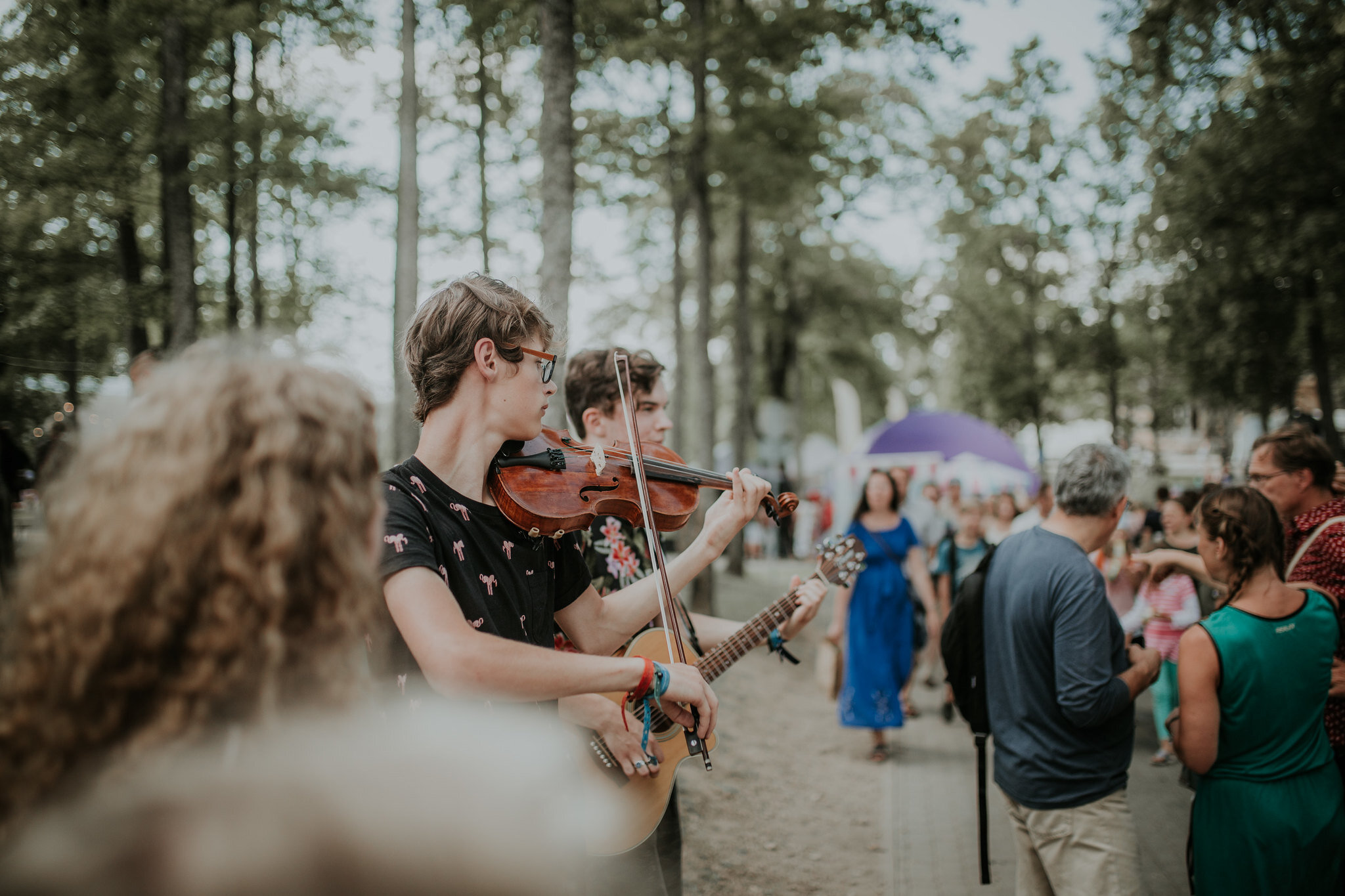
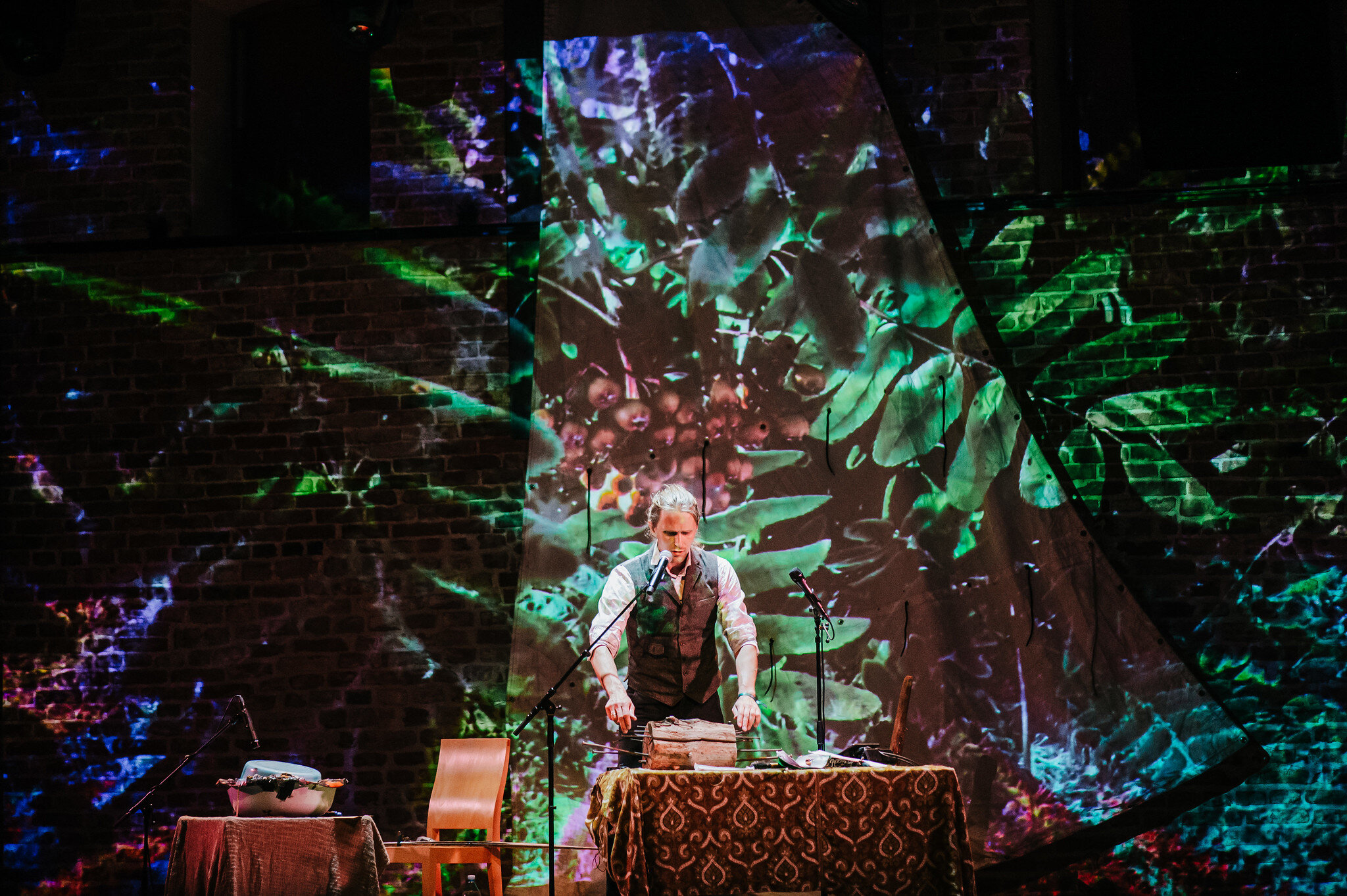

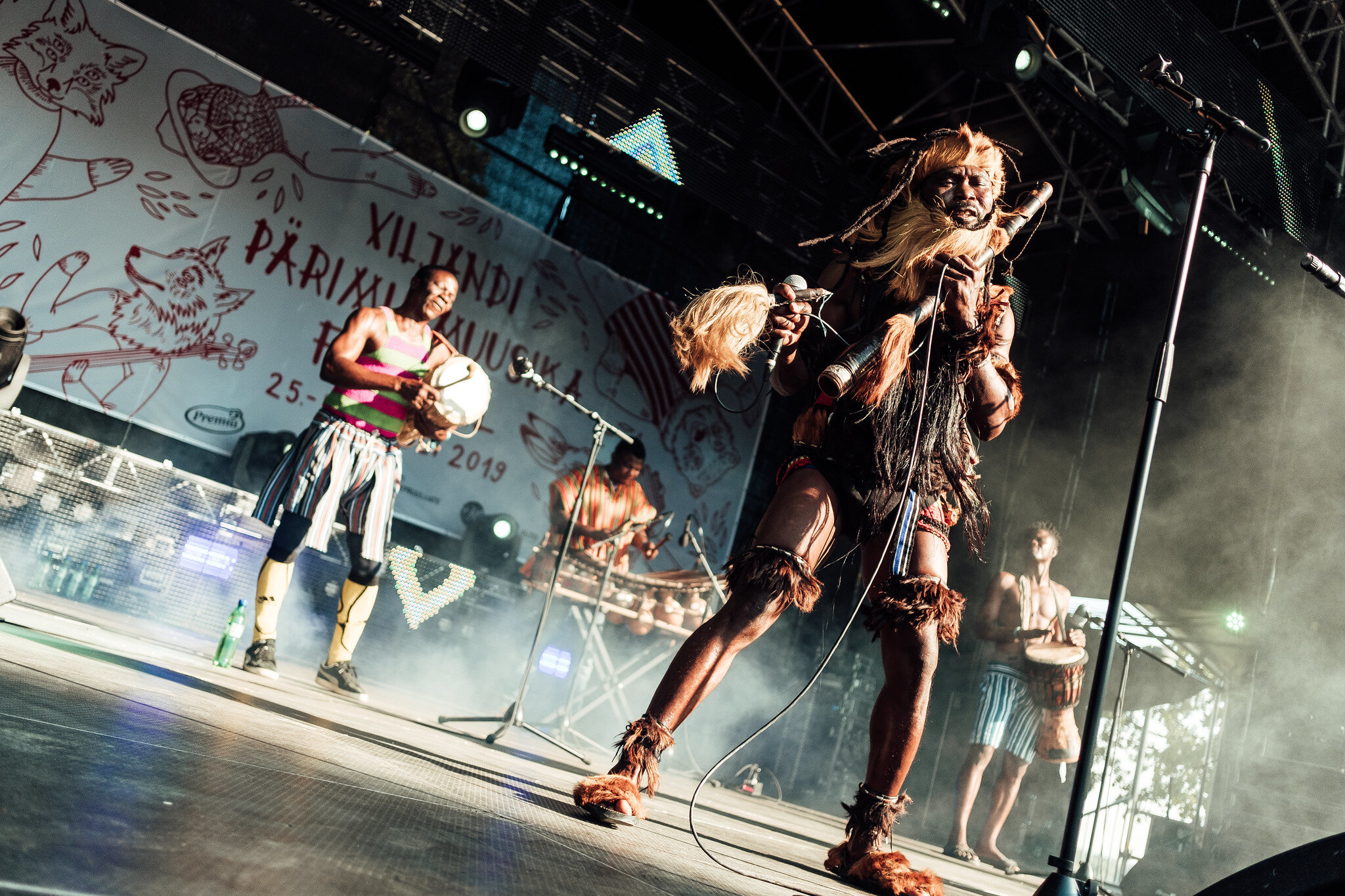
Gallery from Viljandi Folk 2019. Photos: Kevin Kohjus, Silver Tõnisson, Martin Kosseson, Ako Lehemets
Two other Estonian folk music festivals worth mentioning are Viru Folk and Hiiu Folk. Viru Folk has been taking place for a dozen years now, focusing on a different region and community within Estonia or it’s surrounding region and the folk culture as well as music of those places. Featuring music, cuisine, arts and cinema, it’s a total cultural immersion and experience! Hiiu Folk takes place on the picturesque island of Hiiumaa and on top of offering days of music, you have the opportunity to take part in several hands-on course as well as a guided tour of the island’s scenic spots so there’s plenty to explore and do. The festival brands itself as being environmentally friendly and the most family and nature centric festival in the country.
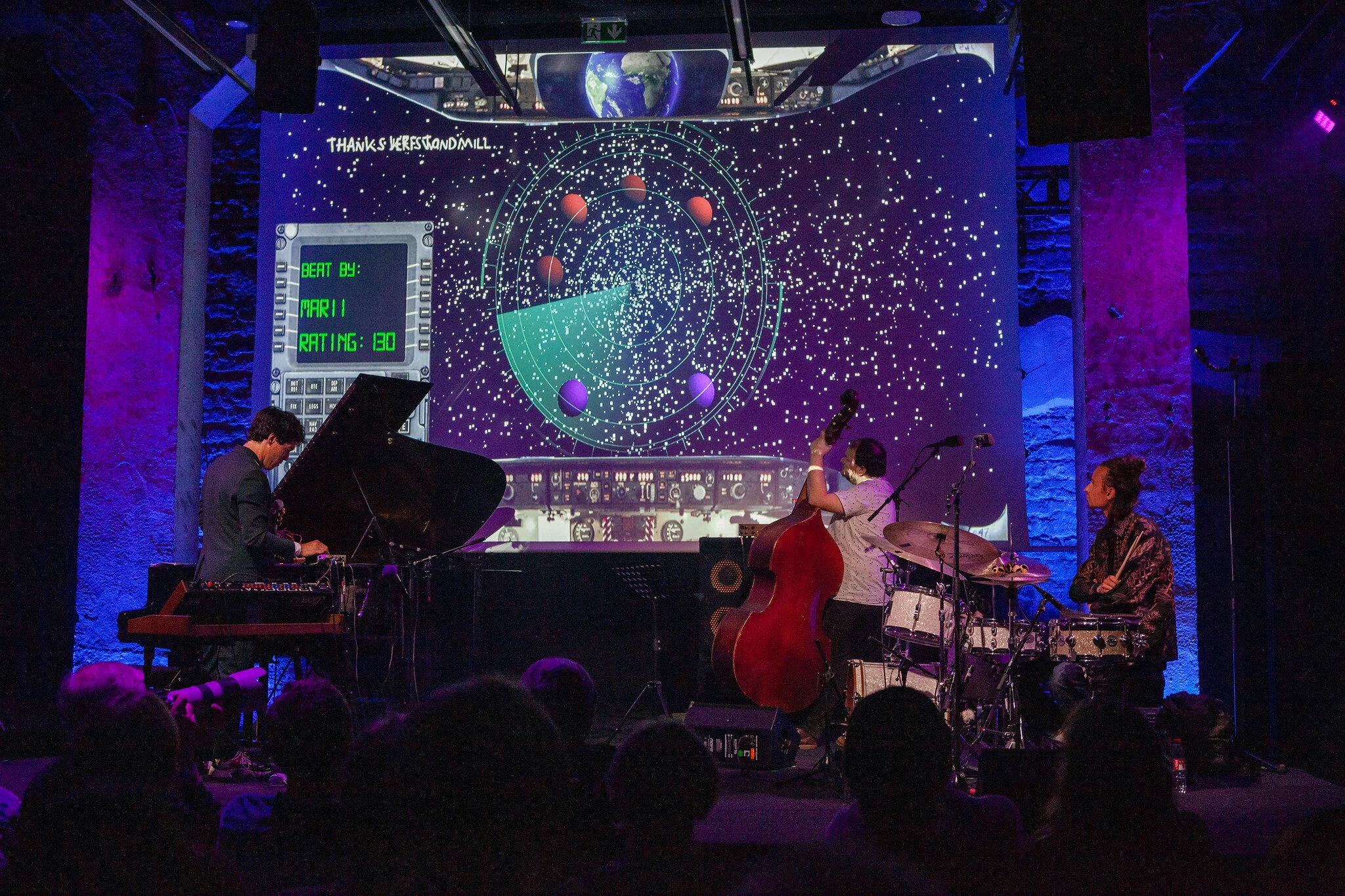
Jazzkaar Festival 2021. Tin Men & The Telephone. Photo by Andra Hamburg, andrahamburg@gmail.com
Are jazz, blues and soul more your vibe? Then Estonia has several world-class festivals to offer you in that respect! One of the most well-known is Jazzkaar, taking place mainly in the capital city Tallinn but also featuring concerts in several major cities around the country, it is the biggest jazz festival across the Baltic States since 1990. Over 3000 artists for around the world have performed, featuring stars such as Bobby McFerrin, Chick Corea and Pat Metheny as well as top notch local acts of course. EMW ambassador and performer not only in the past but also in this year’s upcoming festival, Kaili Kinnon, has had the honour to perform at the festival as well, not to mention previous artists who’ve performed at EMW such as Kadri Voorand and Mingo Rajandi. Another artist performing at this year’s Estonian Music Week, up and coming talent Rita Ray, also put on a great concert a Jazzkaar last year.
Juu Jääb festival has been taking place since 1997, started by famed Estonia jazz saxophonist Villu Veski and has the unique location of the tiny Muhu island, making for a truly different experience! Featuring several days of stellar music, there’s also the opportunity to visit the Music Room at the Muhu Music Farm in which you can pick up instruments, jam and create as well as explore music on your own and with other artists. Sõru Jazz is also a great festival to check out, taking place again in Hiiumaa, right by the water at Sõru port. Happening for the 14th time this year, a plethora of genres from rock to blues and from jazz to folk are covered as well as superb mixing of the genres. What makes Sõru Jazz unique is that it only features Estonian musicians so if you’re looking for a great place to get better acquainted with local jazz and the like, this festival is the one for you!
Classical and opera? Estonia has that covered as well! Klaaspärlimäng or Glasperlenspiel is a classical and world music festival that has taken place for several years in the historical and academic city of Tartu. Offering an opportunity to explore not only local culture but those of countries from all over the world such as China, India and France; this festival has a lot to offer. Also a very worthwhile Estonian classical and instrumental music festival to visit is Pärnu Music Festival, run by the famous Järvi family of conductors. Eight days of top notch local and international musicians make this a must-visit festival for fans of the genre. For fans of opera specifically, the Saaremaa Opera Festival is the place to be. Gathering the best performers from opera stages around the world as well as from right at home, the festival offers four days of operatic immersion. On top of that, the younger generation has the ability to learn about culture surrounding both the musical genre as well as the country through hands-on courses.
Finally, for those who want to learn more about contemporary and alternative music, the Estonian Music Days is the perfect festival. Covering genres such as electronic to experimental and everything in between, there’s a lot to offer for all kinds of tastes. Previous EMW performer Ensemble U has also performed at the Estonian Music Days several times. The festival’s main goal is to unite and highlight similarities between culture and music within the Baltic countries and rotates between Estonia, Latvia, and Lithuania as host countries each year.
It’s clear that Estonia has a lot to offer when it comes to the full cultural and musical experience through it’s renowned and world-class festivals. Why not choose a couple to check out the next time you visit?
Written by: Kati Kiilaspea

We're Listening with EMW: Lauri Kadalipp Social Jazz
From South to North in Estonia, the music scene on a national level has proven to be an active place for expression across genre boundaries. These are the kind of boundaries that nowadays might inhibit full-on recording sessions in another style: if you're a folk musician, to communicate your identity clearly, you can't publicly dip into jazz or hip hop. Or so they say.
One musician who has subverted this arrangement is Tõnu Tubli. I distinctly recall hearing his solo drumming during Trad.Attack's sound check at Tartu College years ago. Sandra and Jalmar were rigorously preparing in their green room; scaling through torupill (bagpipe) lines, strumming chords on the twelve string guitar, between managing the band's social media channels.
Meanwhile, the drummer was floating on the opening groove of John Mayer's “Waiting on the World to Change.” The rhythm, originally played by Steve Jordan, is swung, with a backbeat that's delayed just enough to move the song forward with a “hands shifting in the air” sense of balance. Not only does Tubli have the time of his life behind the drums, he is noticeably enamoured by the unknown in music.
Photo: Madis Reimund
Which leads me to Lauri Kadalipp Social Jazz. In the band, there's Kirke Karja on Fender Rhodes piano and keyboards, Allan Järve on trumpet and flugelhorn, Tõnu Tubli on drums and electronics, and Lauri Kadalipp playing tenor saxophone. It's an assemblage of young musicians who reflect the classic jazz legacy, but like the latest movement in jazz music, eschew an overly sentimental handling of that legacy.
Take the song “Addiction”, from their video series Live at Põhjala Factory. The bait for listeners is the cool swagger of Järve and Kadalipp's dual trumpet and saxophone. Then, when the other two musicians come in, the repeating 20 note or so phrase swings its fists like a welterweight boxer. Karja's keyboard chords swirl moodily on the low end, and there is a draggy funk approach to the drumming. Instead of dancing on the ride cymbal, the hi hat and snare take the lead, with objects added on top for added sound textures. Modern drummers add bells and shells all over their kits and rivets in their cymbals, to add extra rattle and rumble to their sound. Airy electric piano creates a pause in the intensity before the song reaches its colossal height again.
In contrast, their song “23. Mai”, feels like a walk on the clouds. The 3/4 time signature is graceful and dreamy. And again—the players love it. They smile and laugh when they hit the sweetest notes, in the most infectious way.
You may wonder why this take on jazz is different than what's come before it. Yes, they work within the framework of a main musical premise, deviating solos, and a return to the main premise. However, they are preventing jazz music from being sealed off for a select few listeners. The popularity of jazz waned in the 60s. Fusion and smooth jazz had their moments, but there is something exciting happening now.
According to Kadalipp, his first compositions were born when he studied at Heino Eller Tartu Music School. He is also a teacher of saxophone and a big band jazz conductor. Even if he is embedded in this scene, though, what's to stop him from exploring nu-disco, for example? What we are seeing is a desire to move away from boxes and cliques, to a listening experience that is unrestricted.
Talk to a Millennial or Generation Z music lover or instrument player about their playlists, and they'll probably talk about Cory Henry and the Funk Apostles, who played a much anticipated show at Tallinn's Jazzkaar in 2018. You'll hear the names Snarky Puppy, DOMi and JD Beck, Kamasi Washington, Vulfpeck, and Jacob Collier. They all fill different pairs of shoes, but form a collective sound here and now. These artists, and Lauri Kadalipp Social Jazz with them, are presenting what you might call “Omnivorous Jazz.” Young listeners don't isolate themselves in one scene. They mingle.
It's social music.
On top of this, these bands are part of a global musical movement of fresh faces who know they can use virtuosity to change the opinion that “they just don't make good music anymore.” Once this technical ability is understood, enjoyment is achieved on a deeper level.
Keen listeners can play Lauri Kadalipp Social Jazz's 2018 album “Feels Just Right” online ( shorturl.at/jqGMW ). We hope it makes the cut for your playlists.
written by Vincent Teetsov
Originally published in Estonian Life
We're Listening with EMW: Duo Ruut's Face-to-Face Musical Synthesis
With Estonian Music Week, one of our hopes is to bring newer artists and artists we don't have the chance to see as much on stage, just as we celebrate established acts. That's why we want to put a spotlight on Duo Ruut, a duo who have brought their music to our attention in inventive ways. Their notoriety has grown quickly, especially since they won the Noortebänd (Youth Band) competition in 2018.
Do you remember when the five members of Canadian band Walk off the Earth performed Gotye's “Somebody That I Used to Know” on one single guitar back in 2012? That was a clever way to reinvent that song, certainly. However, close instrumental collaboration like that exists on a more regular basis in this duo's performances.
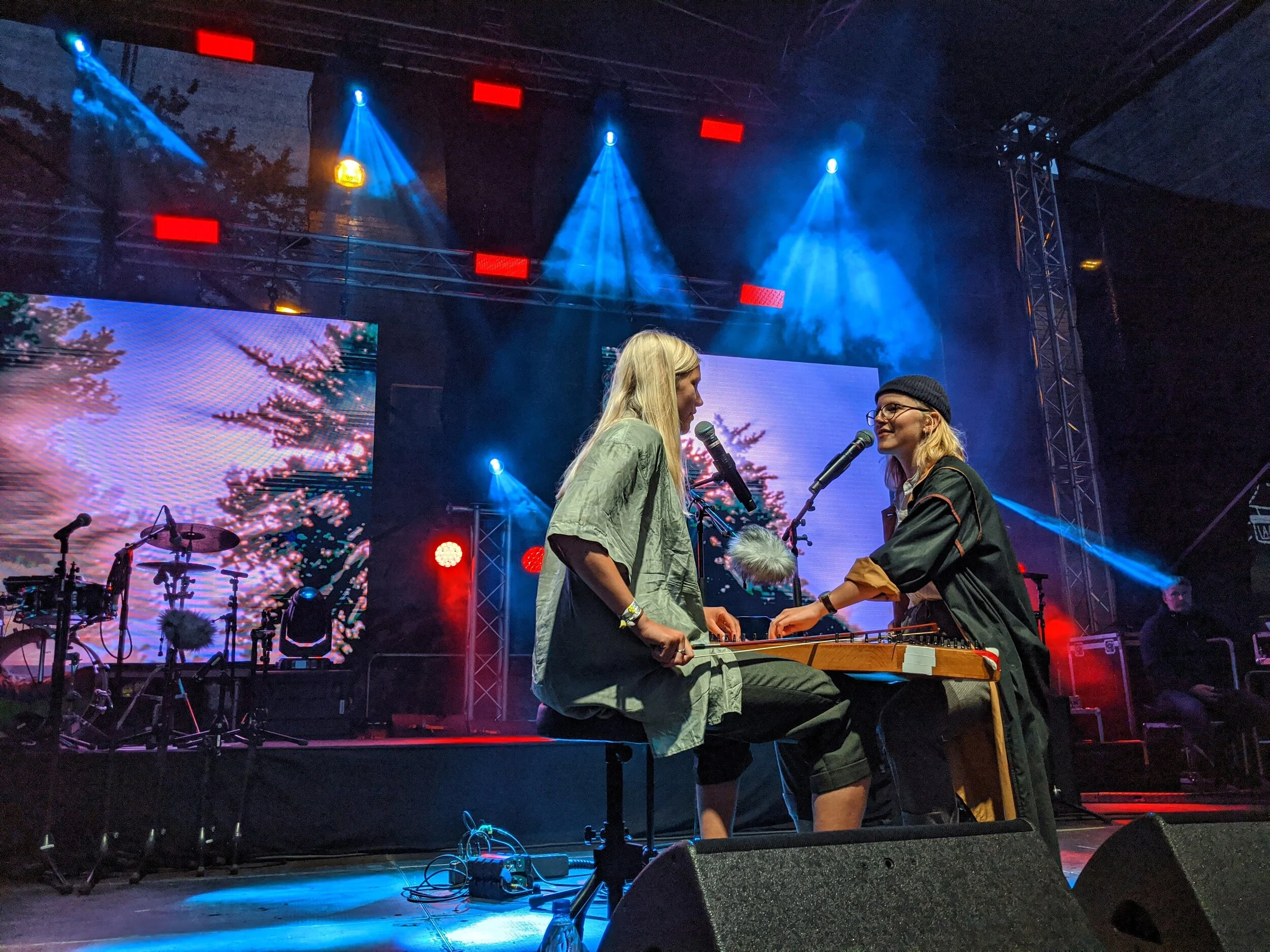
Katariina Kivi and Ann-Lisett Rebane, the musicians of Duo Ruut, adhere their instrumentation and singing as close together as is possible. In live performances, they sit directly across from each other, with a large kannel (zither) in between. In this stage arrangement, they communicate closely with eye contact. You can sense the music resonating between them as they sing in unison, which results in soaring peaks in their songs.
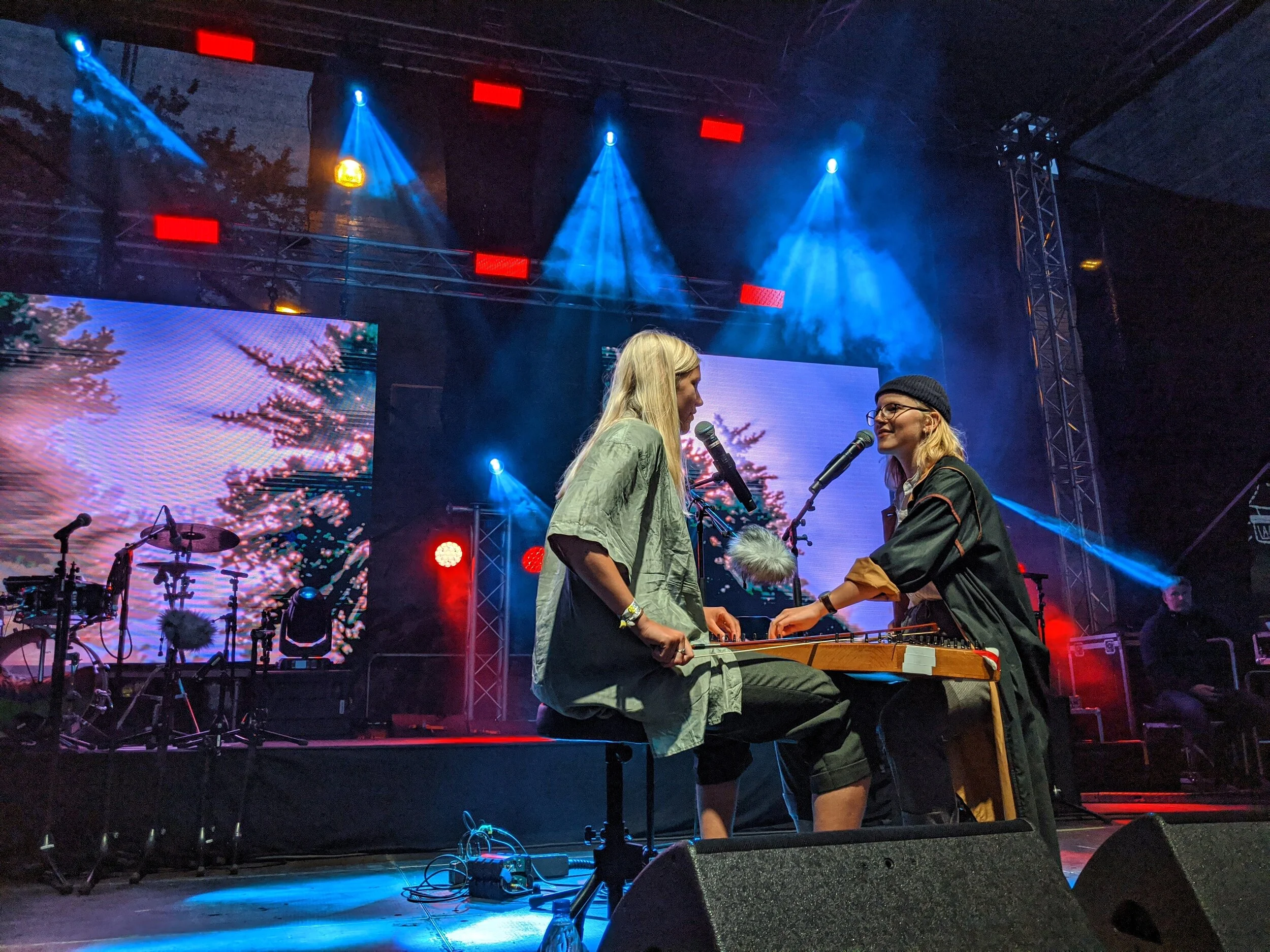
Duo Ruut @Tallinn Music week 2020
Katariina Kivi and Ann-Lisett Rebane, the musicians of Duo Ruut, adhere their instrumentation and singing as close together as is possible.
Duo Ruut use rotating, repeating lyrics when they sing, as we have seen with other contemporary Estonian artists like Trad.Attack! and Marja Nuut. However, what I find different in their use of this musical device is the creation of a meditative state. With the kannel they share, sometimes the strings are bowed, functioning as a drone underneath the changes of the songs. Like the tanpura supports an ensemble in Indian classical music.
To propel songs forward, the kannel's strings are plucked, or drummed on with a pair of wooden drumsticks, as we see in their July 2019 performance for Eesti Pärimusmuusika Keskus (Estonian Traditional Music Centre). Tapping rhythmically with sticks, without leather or felt ends as you might find on dulcimer hammers, produces both a hard, clicking beat and a cluster of sympathetic notes. The strings may even be hit by hand.
An up-close and side-on view of their performances shows something akin to a tense chess game. Something new always crops up. When Ann-Lisett plays one end of the harp, Katariina mutes strings selectively and then marks new passages in the song with brassy undertones. By observing up close, you can truly appreciate the nuances of their playing, as audiences had the chance to do when Duo Ruut played Sofar Sounds Tallinn in December 2018.
On occasion, comparisons have been drawn between their performances and Katajjaq (Inuit throat singing), where two women sing face-to-face, with elements of endurance and competition. They sing until one singer laughs, smiles, or gets tired. Then there is Rekuhkara, as practiced by the Ainu people in Northern Japan. One woman will cup her hands and chant into the other woman's mouth, who in turn bends the notes with her mouth. It's interesting to see similar traditions appearing around the world, though every culture and artist has their own way of performing. Different vocal tones. With instruments or without. Old and new.
Duo Ruut's music translates well to recording, one highlight being their song “Kuhjalooja”, from their 2019 album Tuule sõnad (“Words of the Wind”). Recorded with José Diogo Neves at Retrosonic Pro Audio Studios in Tallinn, each track has breathing space. Each note and vibration becomes all that more impactful.
One thing that plays an important role in the endurance of any musical act is the connection that exists between constituent members. Katariina and Ann-Lisett put it all into their recordings and shows. Focus, friendship, and folklore.
Perhaps Canadian audiences will eventually have the chance to witness Duo Ruut's compositions live, experiencing music that is new to their ears and expands our musical horizons more and more.
Written by Vincent Teetsov
Originally published in Estonian Life
The “Cream of the Crop” of Estonian Music
What better way to introduce the current cream of the crop in terms of the music scene than to look to the Estonian Music Awards (EMA), a place where all genres meet and the best of the best and chart toppers are celebrated. Whether it be alternative, metal, jazz or classical; there’s something of interest to everyone.
One of the main goals of our very own music festival Estonian Music Week (EMW) is to promote the small but mighty country’s vibrant and refreshing culture in general. What better way to introduce the current cream of the crop in terms of the music scene than to look to the Estonian Music Awards (EMA), a place where all genres meet and the best of the best and chart toppers are celebrated. Whether it be alternative, metal, jazz or classical; there’s something of interest to everyone.
A little historical background on these prestigious awards: in 1998, the Estonian Record Producers Association decided that the current state of the music scene at the time wasn’t being honoured sufficiently and created the Estonian Music Awards as a way to do just that. Genre categories as well as distinctions such as the Best Pop Artist and Best Debut Album of the Year were created to reflect different facets of the Estonian music charts and landscape in general. Just like the Grammys and more localized Junos have their own award designs, the Estonian Music Awards have always awarded the winners in each category with a Golden Record as a symbol of their thanks to the contribution of the music scene within that year.
One of our favourites here at EMW is Mari Kalkun in the Etno/Folk category, who was nominated for in the 2021 EMAs, as well as Best Female Performer. The Etno/Folk category focuses on Estonian traditional and folk music, but more specifically how artists and bands in the category successfully integrate those genres within newer experimental, electronic and pop music. It is often regarded as one of if not the most prestigious categories to be nominated for in the awards festival because not only is the winner being honoured for their contribution to the folk and traditional music category but for furthering Estonian culture and renewing and revitalizing it as well through their music, keeping it relevant. No other category at the awards can claim to accomplish this to the same extent. This forms a direct connection to one of the main missions of EMW – continuously keeping Estonian music and culture alive within our diaspora community and also introducing it to the public through artists and bands that are innovative and unique.
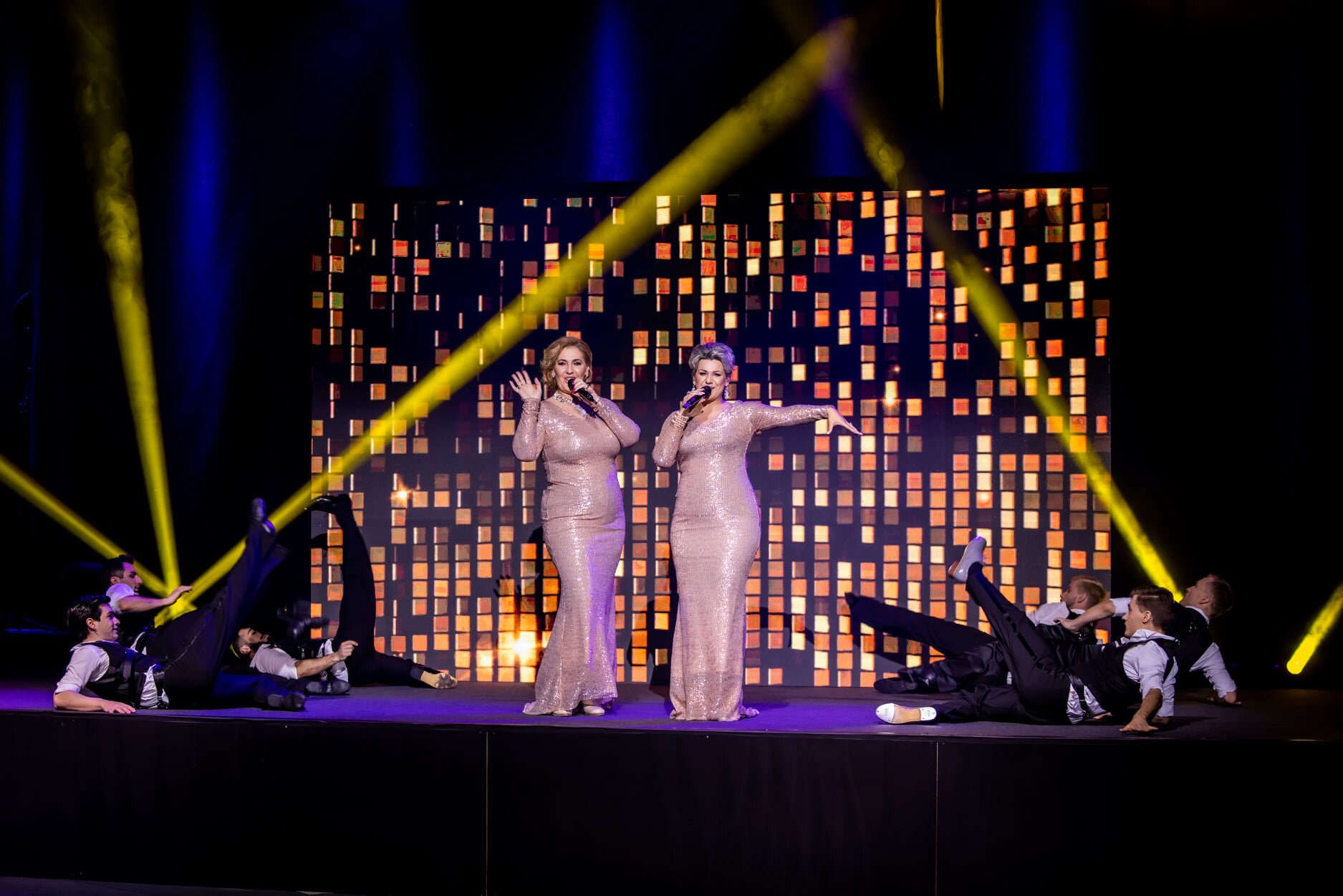
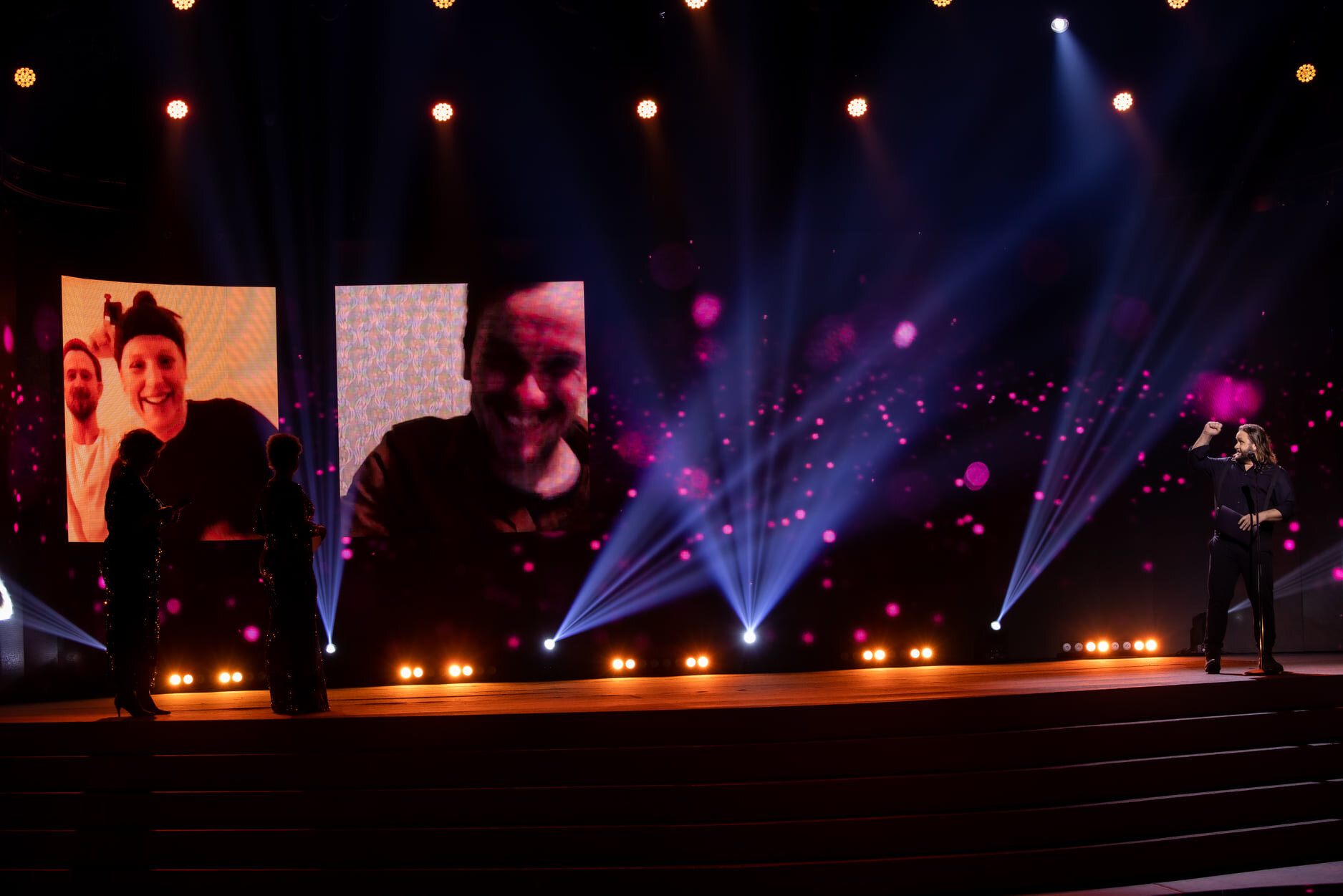
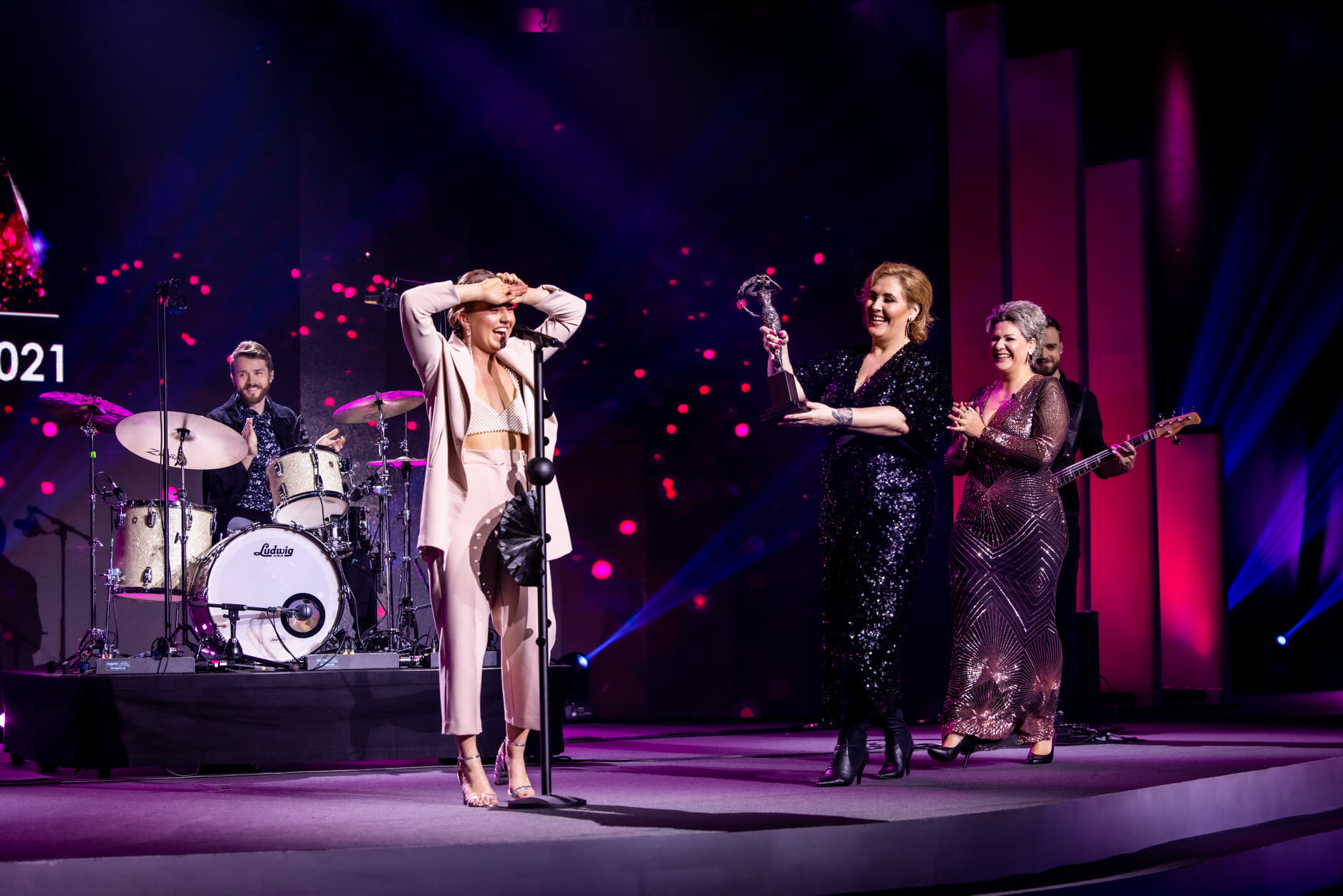
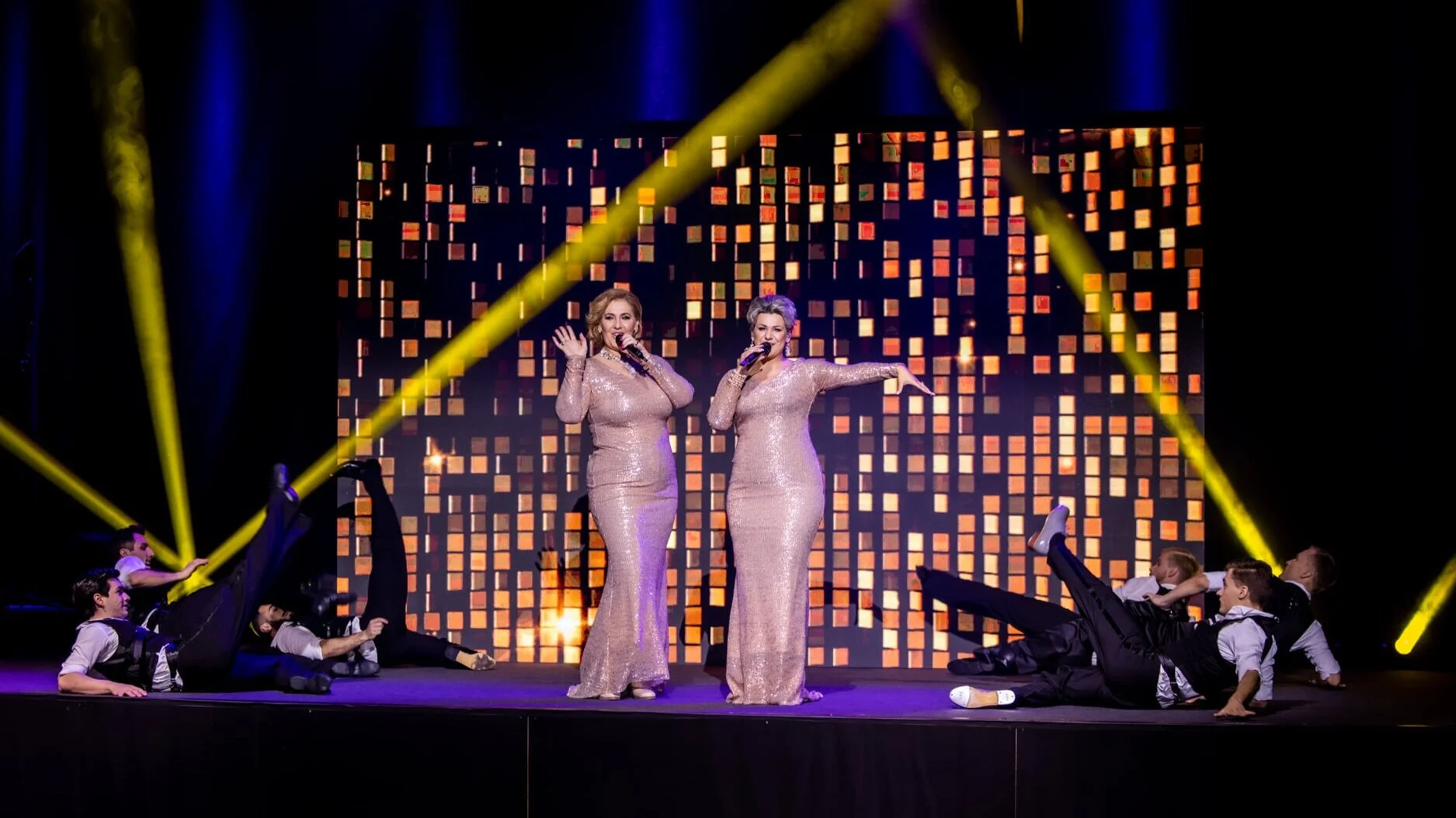
Undoubtedly the person who stole the show at the 2021 Estonian Music Awards was rap phenomenon Nublu, taking home 5 awards; among them Album of the Year, Best Male Artist, and Best Music Video in combination with an up and coming Finnish rap sensation Mikael Gabriel. This was an especially important win in terms of a successful representation of mixing two cultures with a strong ethnic focus together through music and the visual arts once again. Within the esteemed Etno/Folk category, friends of EMW Trad. Attack! took home the award for their acclaimed album Make Your Move; this being the fourth time they’ve taken top spot. Yet another reason to stay tuned, some of these award winning Estonian artists and bands may be performers at our future EMW festivals!
Written by Kati Kiilaspea
Images: Eesti Muusikaauhinnad Facebook Page (Erlend Štaub, Jüri Kartul ja Kairi Killing)
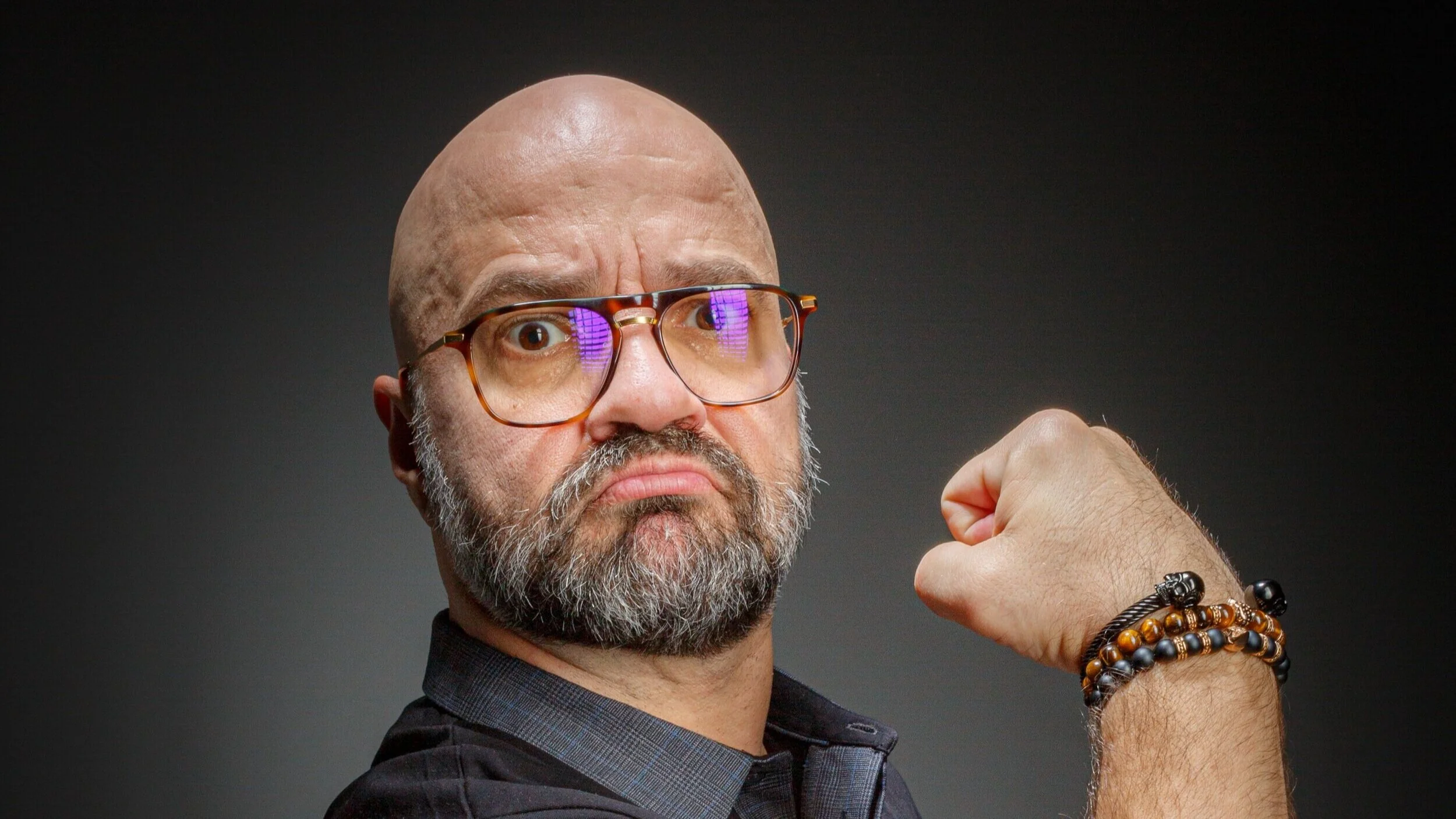
Mihkel Raud: Self-Deprecation for a Better Understanding of Relationships and North America
Raud broke out onto the book scene with his 2008 rock and roll coming-of-age story/autobiography Musta pori näkku, about his memories of playing music in Estonia during the 80s. However, the challenges encountered since his family arrived in the United States in 2017 were what initiated his 2020 book, Võtku homme mind või saatan. The title could be translated as “Tomorrow may the Devil take me.” It's a line from the Rock Hotel song “Aita mööda saata öö”, which in turn is an adaptation of Kris Kristofferson's pining country ballad “Help Me Make It Through the Night.”
The first time I talked to Mihkel Raud was in 2014, at Kotkajärve Metsaülikool, where he was due to deliver a lecture. I had only recently become aware of who he was when I saw his and Lenna Kuurmaa's performance of Morrissey's “Everyday Is Like Sunday” on ETV; and so I struck up a conversation about Morrissey and songwriting over hapukapsas (sauerkraut) at lunch.
If we had to fit everything about Mihkel Raud on a short press release, we would mention his rock and roll career in Singer Vinger and Mr. Lawrence, the personal and sometimes coarse books he's written about his life and perspectives, and the visibility he has as a television personality in Estonia.
But as he told me himself, the Mihkel Raud that people in Estonia know from books, music, and television is not necessarily the same Mihkel Raud that you will get to know in a one-on-one conversation.
Three years after his Canadian lecture, he had settled in the city of Chicago. Getting to the “Windy City” was not direct, though. It happened after almost moving to Seattle, then moving to San Diego for eight months. This was a huge change for Raud, his wife Liina, and their two children. As he described, it caused a marriage crisis, which then led to writing a book.
Raud broke out onto the book scene with his 2008 rock and roll coming-of-age story/autobiography Musta pori näkku, about his memories of playing music in Estonia during the 80s. However, the challenges encountered since his family arrived in the United States in 2017 were what initiated his 2020 book, Võtku homme mind või saatan. The title could be translated as “Tomorrow may the Devil take me.” It's a line from the Rock Hotel song “Aita mööda saata öö”, which in turn is an adaptation of Kris Kristofferson's pining country ballad “Help Me Make It Through the Night.”
Based on what Raud said, it would seem that the lyric in the title, as Estonians will have heard sung by Ivo Linna, is used in a tongue-in-cheek manner. The book is part advice and part humour; what Raud refers to as “self-irony”, or eneseiroonia in Estonian. It's a genre he's been writing in for five or so years now, including the two books before this one. The advice is based on the scientific theories and studies of other researchers, while the humour and observation are sourced from his own life. Essentially, he wants to “drag the theories through [his] own life experience” and use comedic self-deprecation to make the ideas more relatable.
Before making the transatlantic move, Raud considered Seattle, as it's one of his favourite cities in the US. But at the last minute, while looking for apartments, he and Liina decided that they wanted to try living in a climate even more different than Estonia's. They “fantasized that the idea of eternal summer would be interesting.” Though, as it turned out, if one is used to changing seasons, it can be hard to cope without them. The Raud family had their first American Christmas in sunny San Diego, but were soon drawn to Chicago after a family trip there; enjoying the space, theatre, arts, and lively music scene of the metropolis. From this scene, Liina starting photographing local and national bands that came to the city.
As mentioned above, moving somewhere new wasn't easy. Regarding their marriage crisis, he says, “It's a very common thing that happens to families and couples who move to another country. Even though American culture is not too different for Europeans, it still is. Every country is different from what you're used to. Moving to a totally new culture had a very severe impact on our relationship because I travelled, and still do, back and forth a lot [to Estonia]. But my family stays here in the United States.” His professional life remains wholly in Estonia, and he has been able to pull off an arrangement that works for everybody.
The book follows the journey of someone who has had challenges in their relationships and is luckily able to navigate through that. It describes the process of “how he would have done it if he knew the things he knows now.” The fact that he's someone who has “been around for so many years in the Estonian public eye” gives readers a better chance to connect with the content of the book. “Hopefully they will learn new things about the character, me being the character. Hopefully it's inspirational.” He wants to be honest even to the point that some people might call “too honest.” “Sometimes I paint a picture that might come off as offensive, but it's just so that I can make my point even louder. It's a question of writing style rather than philosophy.” Speaking again about his character, Raud says “the Mihkel Raud in the book is not always and rarely is the same person.”
Still, I wanted to know what the biggest differences were that he noticed between relationships in North America and Estonia. For him, a big difference is willingness to talk.
“Americans love to talk about their relationships, intellectualize about them, analyze them. There's a culture of therapy, which is very new to Estonians. It is starting up now. There are more and more therapists working in Estonia. But in America, everybody has one. Whereas I have never done it before. My wife is very Americanized in that sense, as she likes to talk about stuff. In hindsight, I think that was probably one of the things that created the crisis. I was very unwilling to share my feelings or talk about them. Whereas in America, everybody does it. Americans are not afraid or ashamed of their problems. They're probably ashamed if they don't have problems...Writing about relationships as a 52 year old Estonian man, is unheard of, weird, bizarre.”

“Writing about relationships as a 52 year old Estonian man, is unheard of, weird, bizarre.”
Raud contends that the difference between his book and other relationship books is that the others come from authors who are “winners” who have “tools and knowledge to share.” Conversely, Raud's book is taken from the perspective of someone whom he considers to be more of a “loser.” Someone who is still learning.
For that reason, some of the content may be apparent to readers already. “I would hope the most entertaining part is about the story of this one person, rather than some knowledge that they're about to acquire. There are so many better and more sophisticated, informative books if you want to learn about relationships. But if you want to have a laugh, or relate to someone who has been really bad with relationships throughout his entire life, I think that's what my book aims to achieve.”
Being able to take things less seriously sometimes is a dire necessity. Humour isn't flawless. It may distract us from real problems. But, as Mihkel Raud tries to achieve with Võtku homme mind või saatan, humour can also reveal deeper truths.
Written by Vincent Teetsov
Originally published in Estonian Life.